
How much vinyl to wrap a motorcycle? As vinyl wraps surge in popularity for protecting paint and personalizing bikes, understanding the right amount is key. Our guide clarifies material estimates and cost factors, helping you achieve a sleek, durable finish without overspending. Get the precise answer here.
Why Wrap Your Motorcycle Instead of Painting It?
Wrapping a motorcycle is beneficial than painting it because of several reasons. First, a vinyl wrap costs less than painting. Furthermore, vinyl wraps, as protective layer, protect the automotive’s original paint from UV rays, dust, and oxidation, helping increase the vehicle’s resale value.
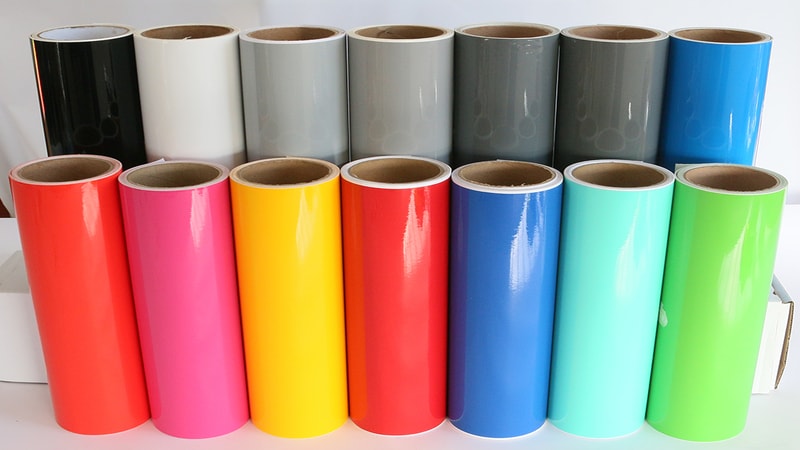
As vinyl wraps are removable, once you are bored with one design, you can easily change it; painting, however, does not allow you to change designs easily. Additionally, painting a vehicle requires you to strip, prep, and cure, which takes a lot of time, whereas a wrap can be installed within a day.
Lastly, vinyl wraps are available in multiple colors and texture options; you can choose between carbon fiber, matte, or chrome finish as per your preferences. All the benefits mentioned above make wrapping a motorcycle a better option than painting it.
How Much Vinyl to Wrap a Motorcycle?
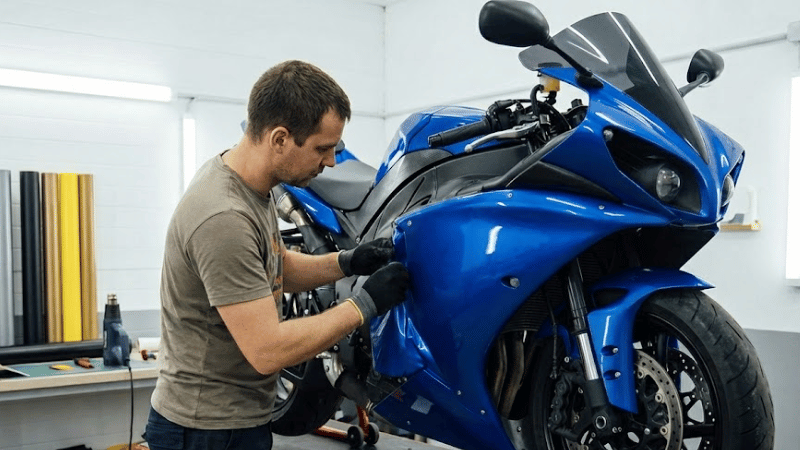
The quantity of vinyl wrap for motorcycles needed depends on the motorcycle type. An adventure bike needs more vinyl as compared to a scooter with a smaller surface area.
The table below mentions the motorcycle types and the quantity of vinyl wrap needed.
| Motorcycle Type | Vinyl Needed in Meters | Notes |
|---|---|---|
| Sport Bike | 5 - 7 m | Sports bikes have full fairings and multiple curved panels, thus requiring more vinyl for stretching and trimming. |
| Naked Bike | 4- 5 m | These bikes have very few panels, thus they can be wrapped easily and with less vinyl wrap. |
| Cruiser / Harley | 6 - 8 m | These bikes have large tanks, long fenders, and big side panels. So even with minimal flaring, more vinyl is needed per piece. |
| Adventure Touring | 7 - 9 m | Adventure bikes have many separate panels and pieces. These separate pieces increase the amount of vinyl needed. |
| Scooter | 2 - 3 m | Scotters have a small surface area and compact parts, thus they need the smallest amount of wrap. |
Note: While buying vinyl wrap, always make sure to buy 10-30% extra to cover mistakes and miscuts, especially while wrapping curved parts.
Factors That Influence How Much Wrap for a Motorcycle
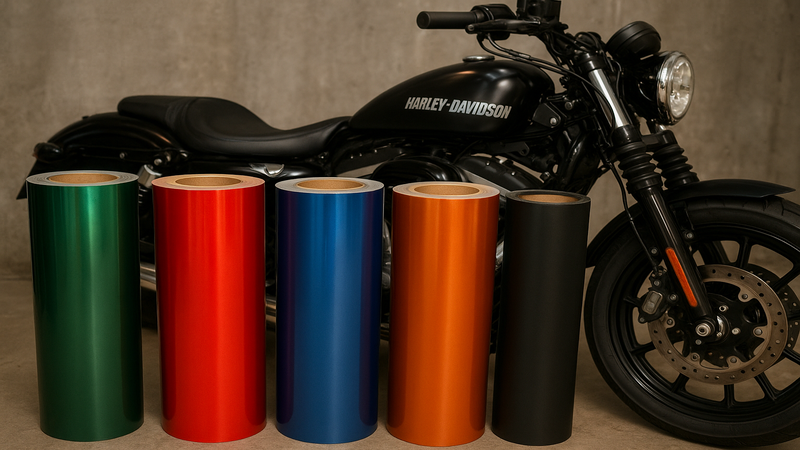
Many factors influence the quantity of vinyl wrap you need to wrap your motorbike. These factors include:
1. Fairing Complexity
If your bike has fairings and curved panels, you will need more vinyl. For example, a Yamaha R6 has a full front and side fairing; this requires extra vinyl for stretching around curves and trimming clean edges.
2. Tank Size and Curvature
The rounded and large tanks require extra vinyl wrap as they are difficult to wrap in one piece and may require additional material. For example, a Harley-Davidson bike with its big, rounded tank needs more vinyl compared to a small scooter.
3. Panniers/Saddlebags Presence
Panniers and saddlebags add to the total surface area. An adventure bike with aluminum panniers needs more vinyl wrap as compared to the same bike without panniers.
4. Total Area to Be Wrapped
If you are only wrapping your bike’s tank or a few panels, then the vinyl required will be in a very small quantity. However, a full-body wrap, including tank, fairings, seat cowl, and side covers, requires buying a wrap in double or triple the amount.
For example, a Honda Grom fully wrapped needs more vinyl wrap as compared to a Grom with only the tank wrapped.
How Much Does It Cost to Wrap a Motorcycle?
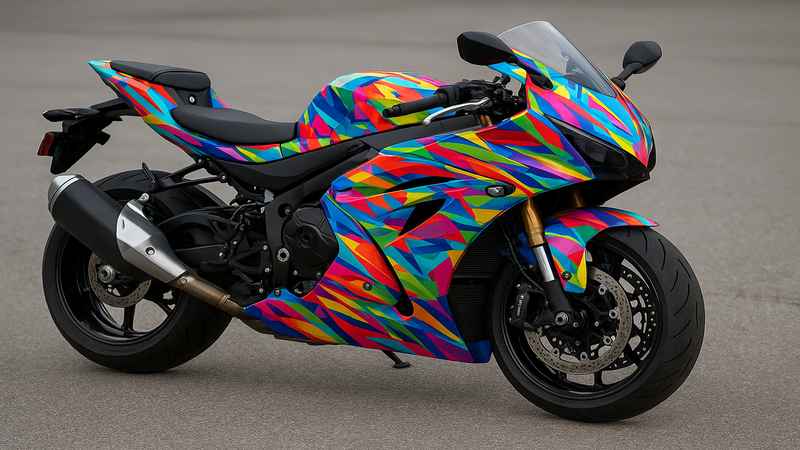
The answer to the question of how much it costs to wrap a motorcycle depends on whether you are doing it on your own or hiring a professional for the job. A detailed breakdown of costs in both cases is provided below to help you find the answer to how much to wrap a motorcycle.
DIY Motorcycle Wrap Cost
DIY Motorcycle wrap cost includes the cost associated with the vinyl material and the tools to be used during the wrap project.
- Vinyl material: Depending on the vinyl brand and the finish you choose, the vinyl material will cost you around $200 – $500.
- Tools: You need to buy tools like a squeegee, a heat gun, cutting tools, and safety gear, costing around $80 – $160.
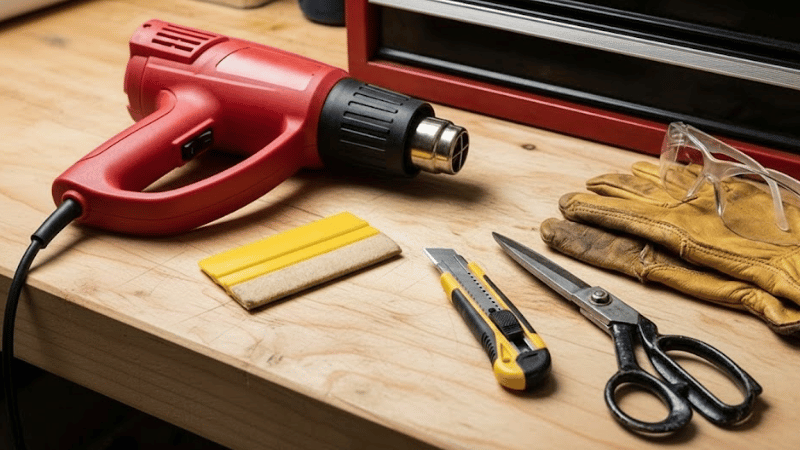
- Total DIY cost: The total DIY motorcycle wrap cost is somewhere around $280 – $660+.
Professional Motorcycle Wrap Cost
The professional motorcycle wrap cost is somewhere around $1500 – $4000, depending upon:
- Bike type: Sports, Naked, Adventure, or Scooter.
- Wrap Complexity: Full-wrap, partial wrap, full fairings, or minimal fairings
- Material Chosen: Vinyl wrap color, texture, and finish
- Removal of Old Wrap: If needed, the old wrap is removed, which further adds to the cost.
It is essential to note that the motorcycle wraps are cheaper than car wraps, due to less surface area. However, the skills and efforts associated with wrapping a motorcycle are more than those needed for a car wrap due to the curves in motorcycles.
How to Choose the Best Vinyl Wrap for a Motorcycle?
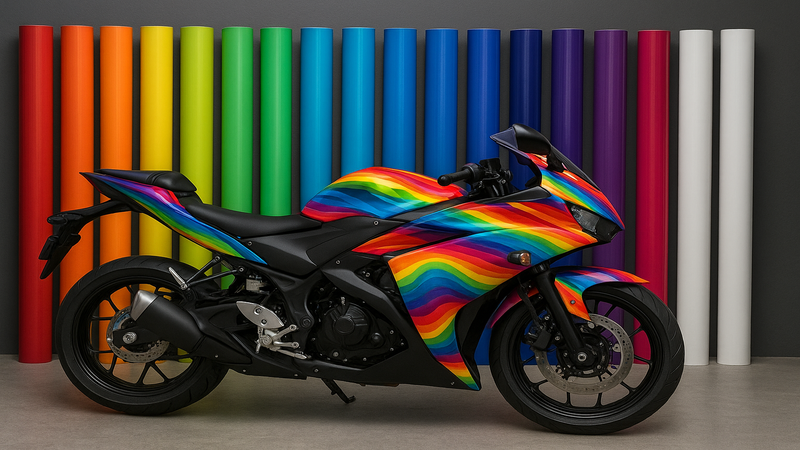
There are different types of vinyl wraps for motorcycles. You need to choose one that is suitable for your requirements. The options of wraps include:
1. Cast Vinyl (recommended for motorcycles)
The cast vinyl wrap is best for curves, and it stretches easily over tanks, fairings, and other rounded panels. It is heat stretchable, which makes installation smooth and wrinkle-free.
As compared to other vinyl wrap options, cast vinyl wrap has the longest lifespan, is durable, and offers protection against sun damage, UV, chips, and scratches. Owing to its benefits, high-quality cast vinyl wrap is mostly used by professionals for full-body or complex wraps.
2. Calendered Vinyl
As compared to the cast vinyl wrap, a calendered vinyl costs less. The limitation of this wrap option is that it works well only on flat surfaces, and it is not ideal for deep curves or complex panels.
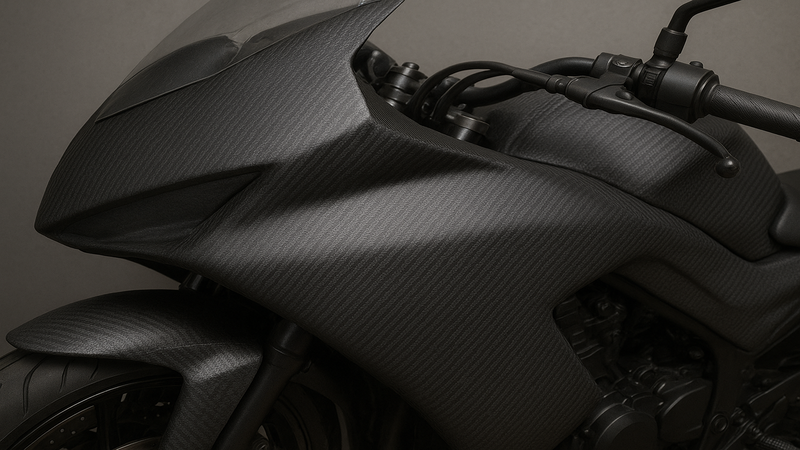
3. Textures and Specialty Vinyl
These wraps include carbon fiber, satin, gloss, color-shift, andmultiple other finishes. These wraps add to the look of the vehicle but are not ideal for beginners due to limited stretch and pattern alignment.
In case you are a beginner who wants to DIY wrap a motorcycle, then cast vinyl wraps are the best option for you, as they are easy to install and are long-lasting.
How to Vinyl Wrap a Motorcycle? A Step-by-Step Guide
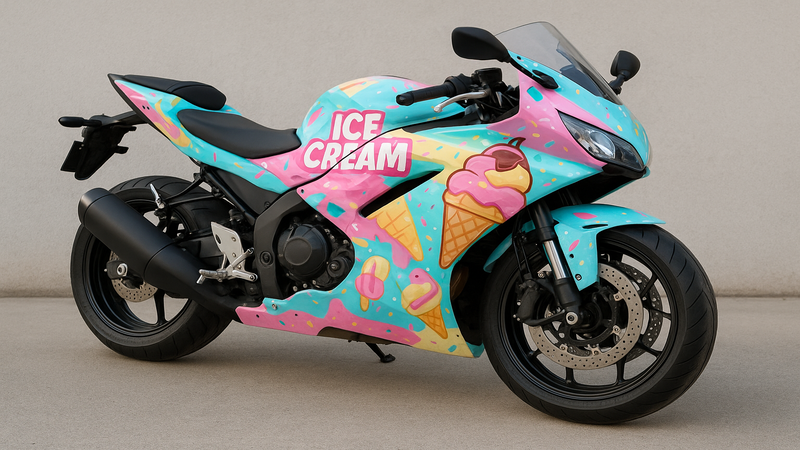
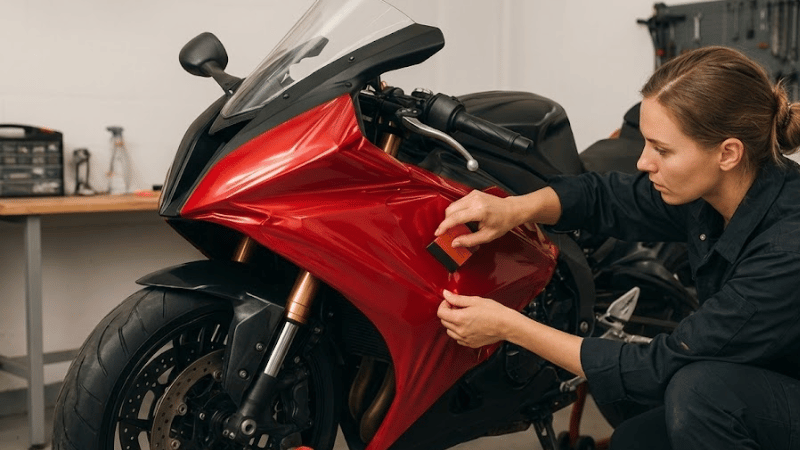
Vinyl wrapping a motorcycle is not a difficult task. By following the step-by-step guide provided below, you can wrap any motorcycle easily and quickly.
Step 1 — Remove Parts You Plan to Wrap
Start by removing the parts you want to wrap. The parts you can remove include fairings, tank (optional), mirrors, etc.
Step 2 — Clean & Prep the Surfaces
Once the parts are removed, its time to clean and prepare the surface. Use a degreaser and alcohol to clean the parts and sand or fix deep scratches to prepare the surface for wrapping.
Step 3 — Cut Vinyl With Extra Margin
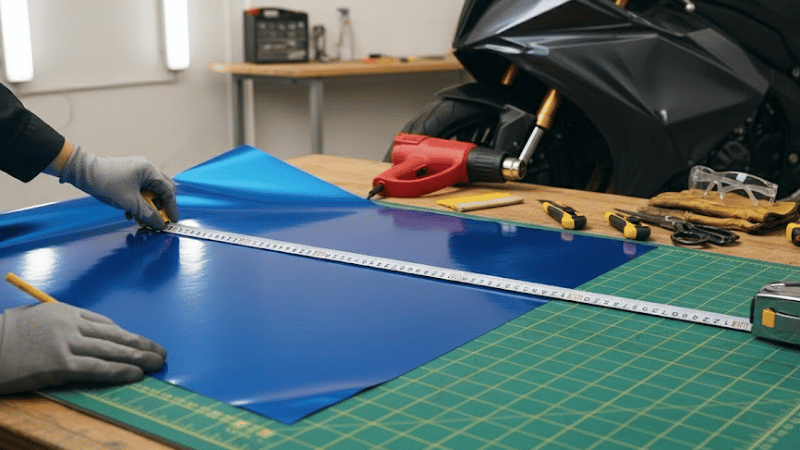
Now measure the panel and cut the vinyl slightly larger than the panel. It is advised to leave 2–3 inches of extra material to adjust for tucking.
Step 4 — Apply Vinyl With Heat
Using a heat gun and squeegee, smoothly apply the vinyl. Stretch carefully and work from the center outwards to ensure a smooth and wrinkle-free installation.
Step 5 — Post-Heat
On tight curves, reheat the vinyl to prevent peeling later on.
Step 6 — Reinstall Panels
Now, carefully put all parts (tank, mirrors, and fairings) back, and that’s it, your motorcycle is all wrapped.
Tips for Flawless DIY Motorcycle Wraps
To achieve a flawless DIY Motorcycle finish, consider the following tips:
- Knifeless tape allows you to cut vinyl precisely without scratching the paint. Make sure to use knifeless tape on tanks, edges, and curves to reduce the risk of mistakes.
- Start with small parts like mirrors and side covers first, and once you are comfortable with stretching, heating, and smoothing vinyl, you can start working on larger and complex pieces.
- Warmer conditions make installation easier and reduce the risk of wrinkles and bubbles, whereas vinyl is not very flexible in cold weather, so avoid wrapping in cold weather.
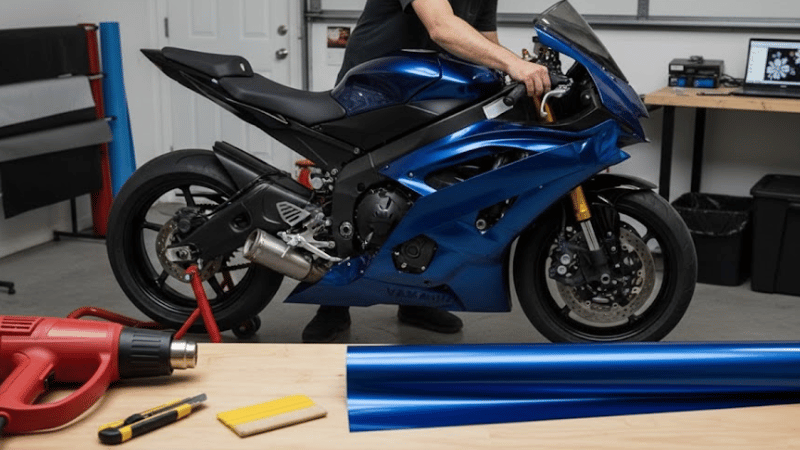
- Make sure to choose manageable finishes. Finishes like gloss, matte, or satin are easier to work with, especially for beginners. Whereas, chrome, metallic, or textured wraps are not likely to stretch and align easily, thus increasing the chance of mistakes.
- Once you are done applying, let the vinyl cool and set on its own. Rushing can cause peeling or lifting, especially on tight curves and edges, so allow proper post-heating to ensure a durable and lasting wrap.
Conclusion
The benefits offered by vinyl wrapping have compelled owners of sport bikes, cruisers, touring bikes, and scooters to choose it over painting their motorcycles. The quantity of vinyl wrap depends on the motorcycle type and whether you want to fully wrap the bike or partially wrap it.
No matter whether you are wrapping your bike on your own or hiring a professional for the job, just make sure to choose high-quality products from the right manufacturers such as Carlike Film to ensure seamless installation.
Get The Best Wrapping Solutions – Contact Carilke Now!
At Carlike, we offer high-quality products that meet strict quality controls withlow MOQ requirements. Our lightning-fast production and shipping, partnered with exceptional customer service, make us better than other manufacturers.
Simply contact us now and benefit from our flexible OEM and ODM services for custom branding and packaging of your business.
FAQs
Q1: Is a motorcycle wrap cheaper than a custom paint job?
Yes. A high-quality wrap offers durable color/print options and protects the original paint, while custom painting involves higher labor and material costs with permanent alteration.
Q2: How long does a motorcycle wrap last with proper care?
A professionally installed vinyl wrap lasts 3-5 years. Using UV-resistant vinyl, avoiding pressure washes, and garage storage can extend its lifespan while keeping the original paint pristine underneath.
Q3: Can you provide free samples of your car wrap?
Yes, we can provide free samples before you place your order. Just tell us what color you need and your shipping address.
Q4: Do you offer discounts for volume purchases?
Yes, if you are a distributor or wholesaler who needs to make large purchases, we can provide a discount based on your quantity. Contact us to get a quote now.