
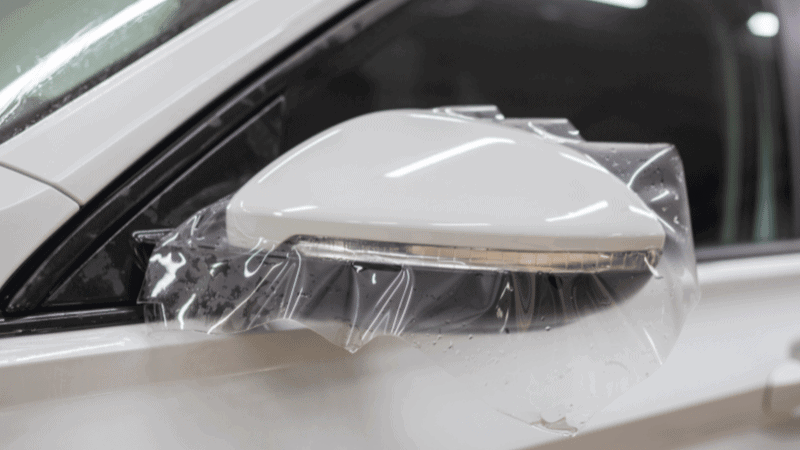
Types of PPF are rapidly expanding, offering various materials, finishes, and protection levels to meet specific needs. Whether you’re looking for durability, aesthetics, or long-term value, selecting the right PPF is crucial. This guide breaks down the different PPF types, helping you make an informed decision for optimal protection and style.
What Is PPF?
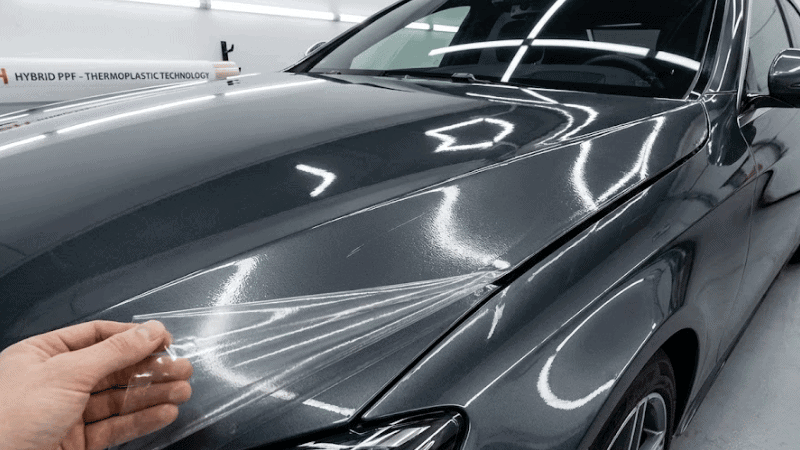
In the vehicle world, PPF stands for Paint Protection Film. Simply defined, it is a transparent and thin film made of thermoplastic urethane (TPU) that is applied over a car’s paint. The purpose of this film is to shield the vehicle’s original paint from rock chips, scratches, bug splatter, and other environmental damage.
Paint Protection Film (PPF) acts as a sacrificial barrier for the vehicle, protecting the vehicle’s paint from minor scratches and other hazards. This physical barrier absorbs impact and disperses the energy from abrasion and debris, preventing them from reaching the car’s paint, preserving the factory finish.
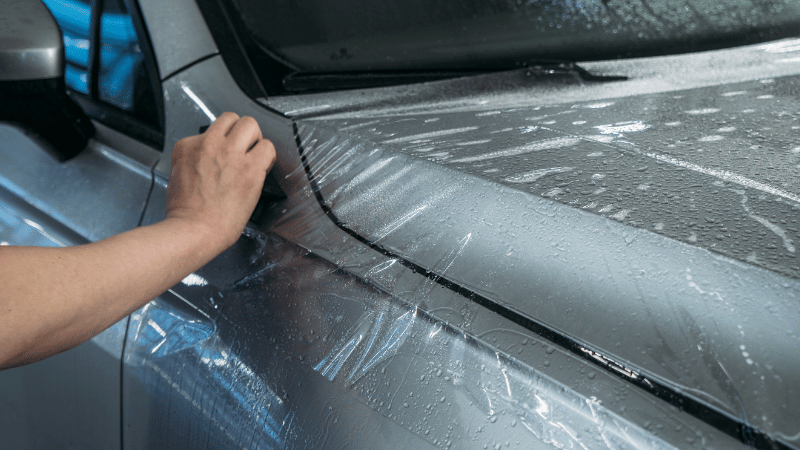
The paint protection films (PPF) market size is projected to grow from USD 533.70 million in 2025 to USD 940.67 million by 2034, exhibiting a CAGR of 6.5% during 2025–2034.
Compared to ceramic coatings and wax, which mainly enhance the vehicle’s hydrophobicity and shine, PPF acts to protect the vehicle from bird droppings, paint chips, impact, and abrasion. Many modern, advanced PPF films now also offer self-healing properties, thus tackling light scratches on their own.
Types of PPF by Material
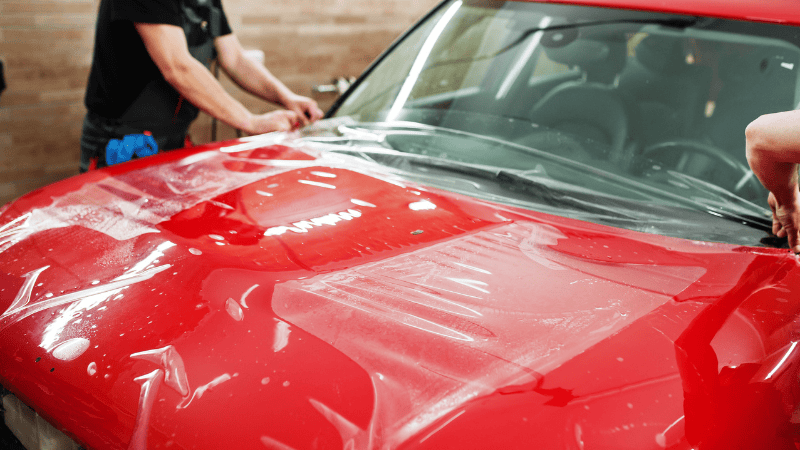
There are different types of PPF, each protecting a car’s paint in its own way. All these types of paint protection films differ based on their material as well as the finish they provide to a vehicle’s exterior upon application.
The material used in PPF directly affects its durability, clarity, self-healing abilities, and overall ppf cost. While premium materials last longer and are extremely transparent, they also come with a higher upfront price.
On the other hand, if you go for budget options, you will need to compromise on performance. It’s suggested to look at the long-term ownership costs and the ROI of ppf options over their upfront costs. This way, you can easily get the ultimate protection with a reliable protection film that lasts long.
TPU-Based PPF (Thermoplastic Polyurethane)
TPU-based PPF is one of the most common and widely used premium paint protection options. This instant healing ppf is known for its excellent elasticity, strong regenerative abilities, and long service life
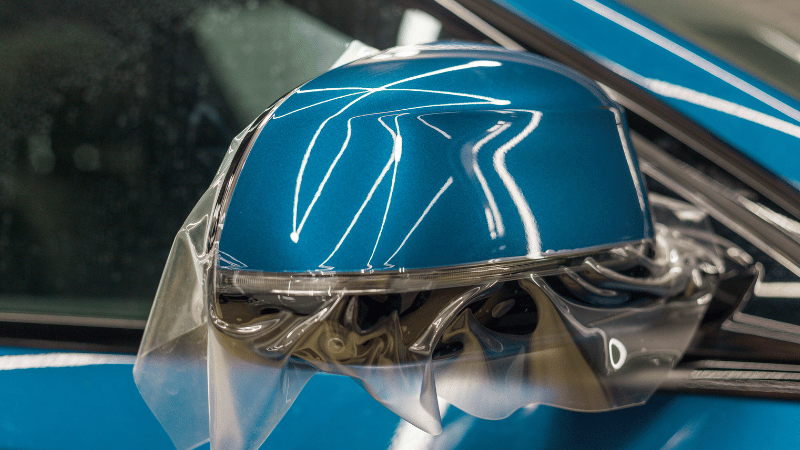
With proper care, it can show a service life of around 5 to 10 years. This makes it an ideal choice for luxury cars as well as daily-driven vehicles that need proper protection to maintain a strong appearance, preserve factory paint, and a glossy finish.
When choosing between TPU options, it is crucial to understand the chemistry. Early generations of PPF (often PVC or basic TPH) were made with Aromatic Urethane, which is sensitive to UV radiation and oxidizes (turns yellow) quickly upon sun exposure.
Modern, premium TPU films use Aliphatic Polyurethane. This chemical structure is UV-stable and chemically inert, meaning it does not react with sunlight to change color.
ccording to materials science research, aliphatic compounds offer superior weatherability compared to aromatic counterparts.
TPH PPF (Thermoplastic Hybrid)
TPH PPF (thermoplastic hybrid PPF) is another affordable yet relatively luxurious alternative that combines plastic and polymer materials. It offers basic scratch protection but has low elasticity and shows almost no self-healing abilities.
Its shorter PPF lifespan makes it suitable only for short-term usage or when you only need entry-level protection for your vehicle’s paint.
Polycarbonate TPU PPF
Polycarbonate TPU PPF blends TPU with polycarbonate, adding rigidity while retaining flexibility. This results in a layer with improved impact resistance, structure, and overall strength.
This type of PPF is commonly used in high-performance vehicles that require premium protection against high-speed debris and harmful UV rays.
| PPF Material Type | Durability | Clarity | Self-Healing | Price Range | Best Use Case |
|---|---|---|---|---|---|
| TPU-Based PPF | High (5–10 years) | Excellent | Strong | High | Luxury & daily-driven vehicles |
| TPH PPF | Low to Medium | Good | Limited | Low | Short-term or budget protection |
| Polycarbonate TPU PPF | Very High | Very Good | Strong | High | High-performance & premium vehicles |
Types of PPF by Appearance
The appearance of car protection film not only affects a vehicle’s aesthetic appeal but also defines its resale value and maintenance needs. There are different types of PPF based on appearance, letting owners decide between factory-fresh protection or a bold, customized finish.
Glossy PPF enhances the look of the paint and is a common option for those who want to improve the depth and shine of their vehicle while preserving the original paint and look. This makes it ideal for new cars and for owners who are focused on long-term resale value.
Matte PPF gives a sleek and stealthy matte finish to the vehicle. This PPF can convert any glossy vehicle into a satin one, giving it a matte finish without permanent repainting or expensive paint jobs. This makes it especially popular for luxury and sports vehicles.
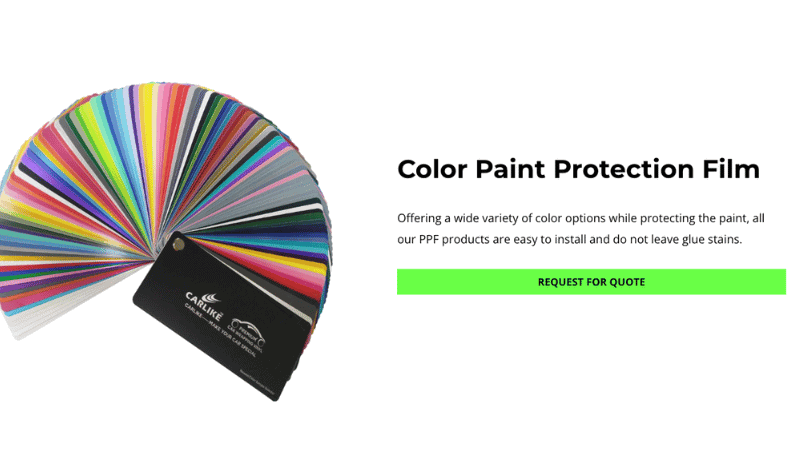
Colored PPF combines full paint protection with a custom colour change, offering car owners more durability than generic vinyl wraps. However, colored PPF is quite expensive and is suitable mainly for premium vehicles.
Some owners may also opt for PPF services on special application areas such as windshields and glass panels. In these areas, PPF protects against heat and UV damage while also preventing scratches, staining, and etching from environmental exposure.
| PPF Type | Visual Finish | Protection Level | Durability | Cost | Best For |
|---|---|---|---|---|---|
| Gloss PPF | High-gloss, OEM look | High | Long-term | Medium–High | New cars & resale-focused owners |
| Matte PPF | Satin/stealth finish | High | Long-term | High | Sports & luxury vehicles |
| Colored PPF | Custom color change | High | Long-term | Very High | Premium customization |
| Special Area PPF | Clear/tinted | Medium–High | Medium | Medium | Glass, headlights & high-exposure areas |
Structure of PPF
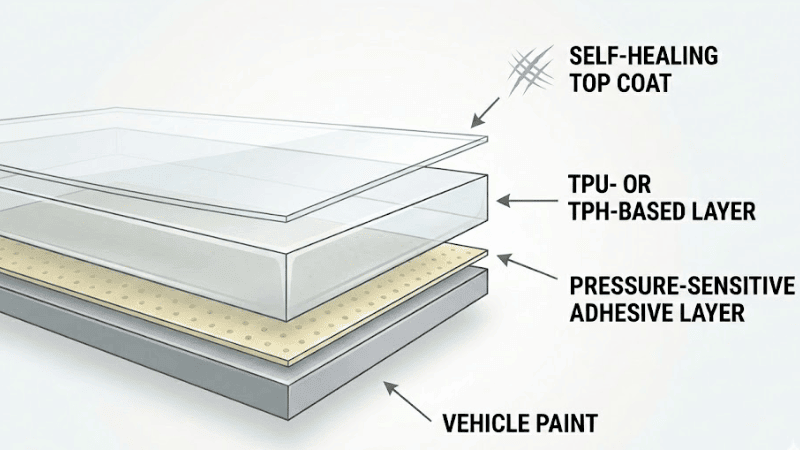
PPF thickness defines its impact resistance, flexibility, and overall durability. A well-made multi-layer PPF structure generally indicates greater thickness and stability. Based on thickness, PPF comes in different types.
The self-healing surface coating is the top layer that is capable of repairing light scratches and swirl marks on its own using heat from sunlight. It helps maintain the overall gloss and clarity of the film.
The TPU- or TPH-based layer forms the core of any PPF film. It determines the impact-resistance capability, flexibility, and the level of protection provided by the film.
The pressure-sensitive adhesive layer in PPF ensures uniform and strong bonding of the film to the paint. This makes sure that the results of application are clean, residue-free, and that the film can perform its job effectively.
| PPF Layer | Function | Protection Role | Effect on Durability | Impact on Cost |
|---|---|---|---|---|
| Self-Healing Top Coat | Scratch repair & gloss retention | Protects surface finish | Extends lifespan | Medium |
| TPU / TPH Base Layer | Impact absorption & flexibility | Main stone-chip protection | Major durability factor | High |
| Adhesive Layer | Secure paint bonding | Prevents lifting & damage | Ensures safe removal | Low–Medium |
PPF vs PPF Ceramic Coating – What’s the Difference?
PPF is a thick and transparent layer made of polyurethane that physically absorbs environmental impact and protects the vehicle’s original paint.
It provides excellent protection against stone chips, scratches, sun damage, and road debris, and thus enhances the vehicle’s resale value.
PPF and ceramic coating is often confused. Ceramic coating is a layer of liquid polymer applied to the vehicle’s surface for enhanced gloss and chemical resistance. Unlike PPF, ceramic coating does not provide physical protection to the vehicle’s paint and cannot even resist normal wear.
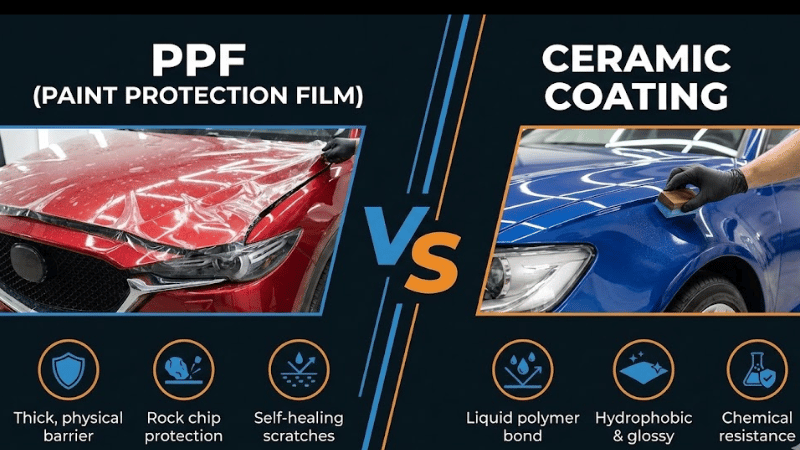
For the best results and maximum protection of the vehicle’s paint, experts suggest you install PPF along with ceramic ppf coating to prevent physical damage while also adding UV resistance, hydrophobic properties, and a glossier shine.
Which Car Protection Film Should You Choose For Vehicle Protection?
Based on driving conditions, highway drivers should opt for thick, self-healing, premium PPF. On the other hand, vehicles used mainly for city driving can perform well with a standard scratch-resistant PPF. For harsh weather and highway driving, it is suggested to choose UV-resistant premium PPF.
Different vehicle types require different forms of PPF installation. For luxury and sports cars, a full-body premium PPF is preferred, while fleet vehicles are better protected with PPF applied to their high-impact areas or pre-painted surfaces. Partial PPF is ideal for daily drivers.

Based on your budget and vehicle ownership duration, you can choose partial PPF for short-term ownership, while full-body PPF offers better resale value when the vehicle is fully protected.
Conclusion
The major PPF types include variations based on the material’s type, thickness, structure, and appearance. You can opt for any PPF type depending on your budget, vehicle’s ownership duration, and your expectations from the protective coating.
Always try to consult with professional PPF installation providers to ensure a smooth application of protective film with measurable results.
Get Durable PPF from Carlike – Contact Us For A Free Quote!
At CarLikeFilm, we offer expert car paint protection solutions, customized to suit the needs of individuals and businesses alike. With years of experience, we offer surprisingly low MOQs on high quality ppf options and flexible OEM and ODM services.
Over the years, we’ve helped people protect their vehicle’s original paint and resale value with reliable PPF solutions. Contact us now and get a free quote along with fast shipping and exceptional customer support for all your individual and bulk PPF requirements.
FAQs
Q1: Is PPF worth the cost?
Yes, PPF protects your vehicle’s paint from damage, preserving resale value and reducing the need for expensive paint repairs.
Q2: Can PPF be removed without damaging the paint?
When installed correctly, PPF can be safely removed without damaging the vehicle’s paint, making it a cost-effective and non-permanent option.
Q3: What is the biggest advantage of your product?
Carlike’s paint protection films are made with high-quality TPU materials. Their biggest advantages are self-healing stain resistance and superior optical clarity.
Q4: Can you provide samples or color cards?
Yes, we can provide you with samples and color cards before your order. Our color card contains hundreds of colors you can choose according to your market needs. Contact us now!