
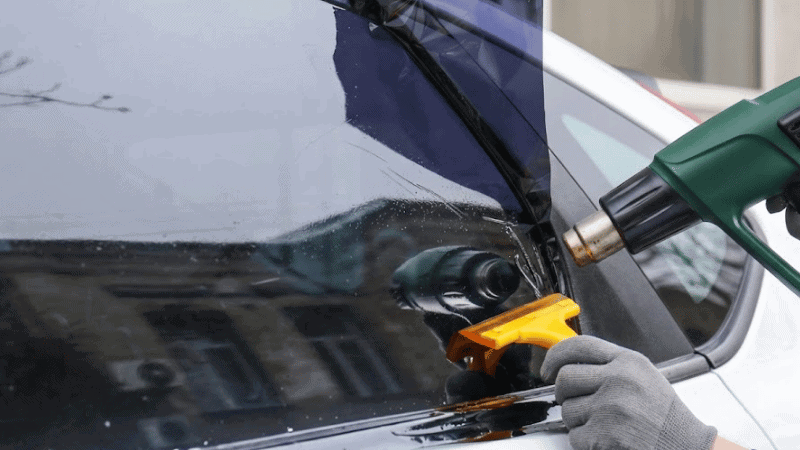
Do you also want to get your windows covered with ceramic tint, but feel reluctant because of some myths you have heard? Well, you must know that ceramic tints have a lot of myths going around due to a lack of understanding. Therefore, in this article, we will bust the common 7 myths and prove that ceramic tint is a far superior choice to ordinary tint films.
Myth 1: Window Tint Is Purely for Aesthetics
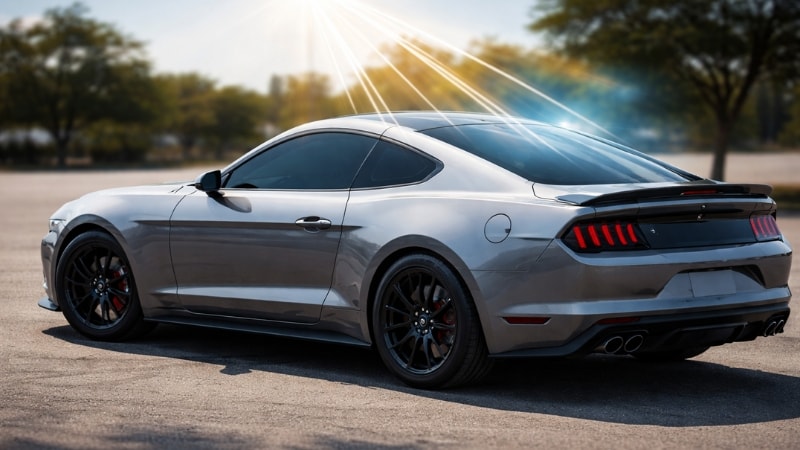
While many drivers do get window tinting done for aesthetic purposes, and tints do look elegant, their true value doesn’t lie in beautification. Instead, ceramic tints happen to offer various functional benefits that go unnoticed.
These tint films have nanoparticles that reflect back heat and UV rays, which contribute to significant heat reduction. These films also reduce the glare and, hence, help in providing better visibility on the road.
Myth 2: Film Does Not Actually Lower Cabin Temperature
It is commonly perceived that window tints are only for darkening the windows for privacy or aesthetics; however, these functions are just a part of the equation. Unlike traditional window tints, ceramic tints play a more important role in lowering the cabin temperature.
Without Tint
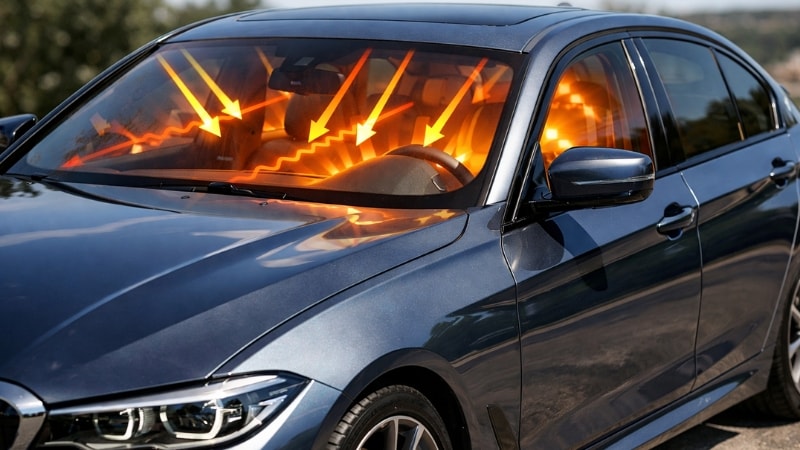
In the case of regular window glasses, a portion of UV and infrared wavelengths passes through the window. These radiations carry high thermal energy, and once they enter the cabin, they create a greenhouse effect that increases the interior temperature.
This increased temperature causes driving comfort, as well as leads to higher fuel consumption because air-conditioning has to work harder.
Ceramic Tint
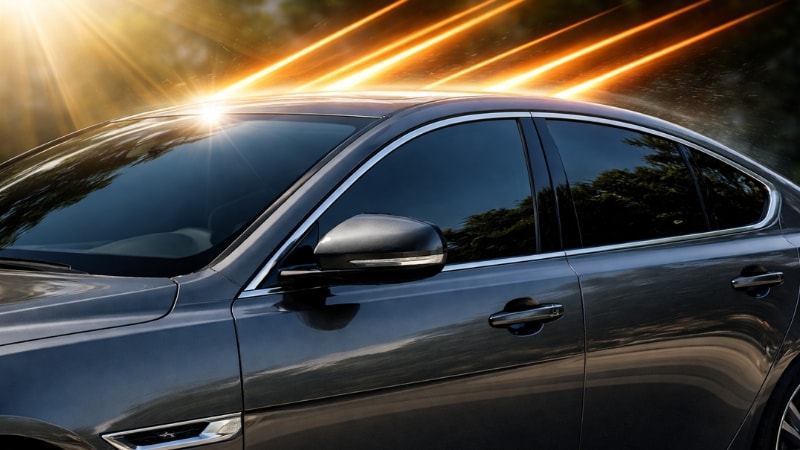
On the contrary, ceramic window tint performs the function of heat rejection by blocking infrared light and solar radiation right off the surface. The ceramic particles in the film block the wavelengths from passing through and reflect them into the environment.
As a result, ceramic tint offers heat protection and enhanced privacy at the same time.
Myth 3: Every Type of Window Film Is Identical
For car owners, all window tints are just films that have dyed with tints and are used for darkening the windows. However, window tint films come in different varieties, each of which differs in terms of UV protection, signal interference, durability, and much more.
Here is a quick breakdown of the different types of window tints available in the market.
Dyed Tints
These are traditional tint films that have a cheap dye layered between the adhesive layer and the outer layer of the film. Dyed films are the most basic ones since they just do the job without any functional features such as UV protection or glare reduction.
Metallic Tints
Unlike dyed tints, metallic tints come with excellent benefits because they have micro-metallic particles incorporated in the matrix of their tint layer. Too much ultraviolet (UV) radiation from the sun and sunbeds can cause skin cancer. These particles provide effective solar heat reduction by blocking harmful UV rays from transmitting through the window and deflecting other radiation.
However, one major drawback is that metallic films interfere with electronic signals, which directly affects the GPS.
Ceramic Tints
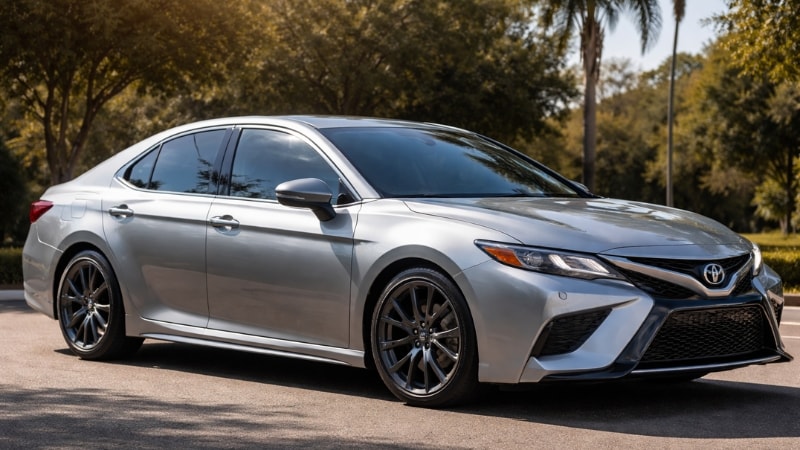
Having ceramic particles engineered into the matrix through nanotechnology, ceramic tints blocks up to 99% of UV rays and rejects up to 60% and 70% total solar energy.
Moreover, in contrast to the other counterparts, ceramic window tint also offers superior clarity and doesn’t interfere with the electronic signals. Thus, given these properties, ceramic window tints stand as the best tinting option.
Myth 4: Ceramic Films Impair Visibility for Night Driving
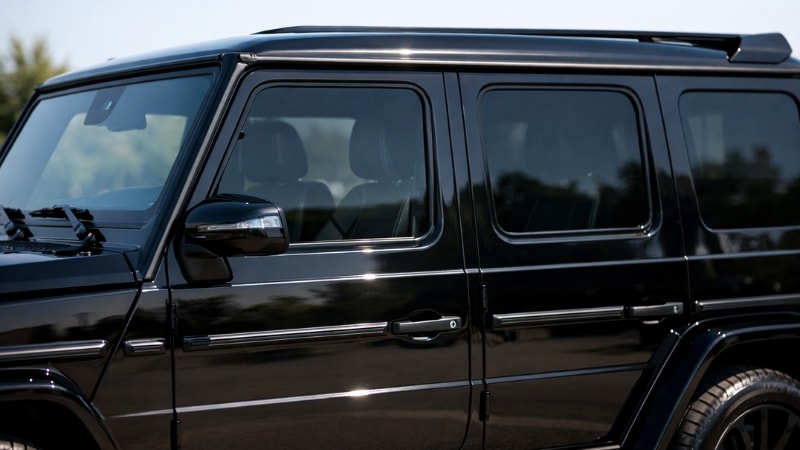
As the common thinking goes, if a film darkens the window, it might as well impair the visibility because dark is synonymous with lesser clarity. This common perception leads to the myth that ceramic films affect visibility during driving.
The truth is, with the right tint percentage, ceramic films actually improve visibility at night and here’s how.
Ceramic Tint Visibility Explained
In ceramic films, the heat and UV rays blockage is correlated with the ceramic particles instead of the tinting dye, unlike in dyed or metallic tints. However, visibility through a film depends on the visible light transmission, which in turn depends on the amount of tint in the film.
So, you should choose a legal tint percentage that provides sufficient light transmission to prevent the view from becoming too dark.
Ceramic Tint vs Regular Tint at Night
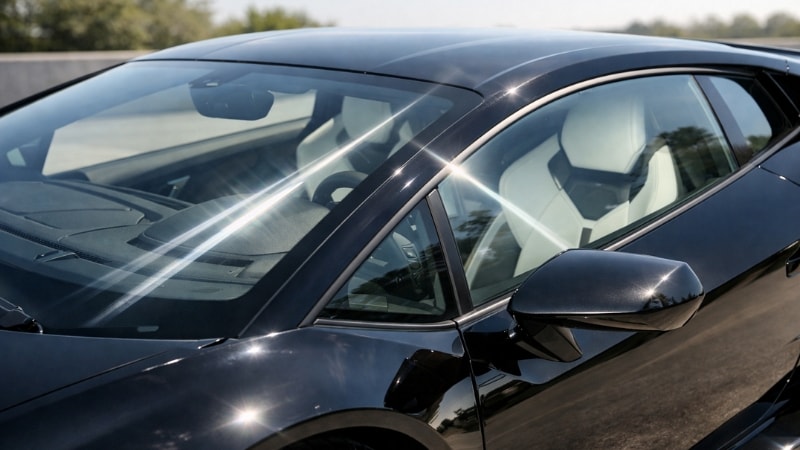
When deciding between ceramic tint and carbon tint, customers often ask, “Is ceramic tint easier to see out of?” At night, ceramic tint films filter out unnecessary light from the surrounding area, reducing glare and eye strain.
So, breaking the common myth, ceramic tint rather improves the visibility at night, which a regular tint cannot do.
Myth 5: It’s Impossible to See Through Ceramic Tint
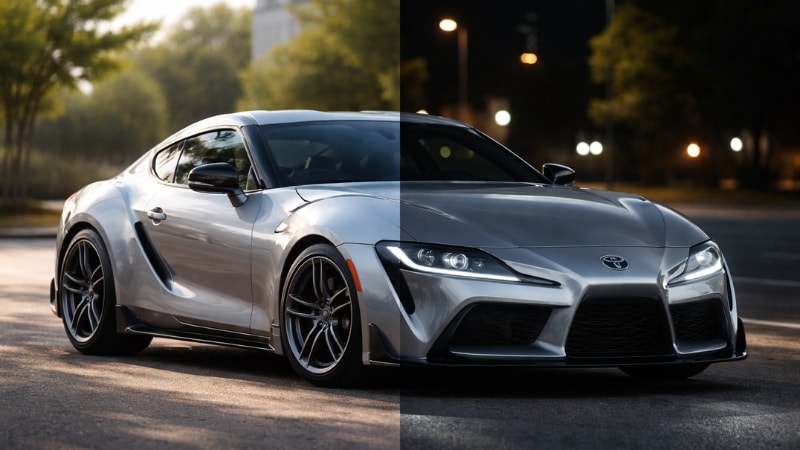
Another myth that surrounds ceramic tint is the question, “Can you see through ceramic tint?” Ceramic tints come in different tint percentages, from 5% and 20 percent to 50% and 70 percent, which have different visibility levels.
However, one thing is clear: no matter how dark the ceramic tint film is, it doesn’t diminish complete visibility, and it is always possible to see through it.
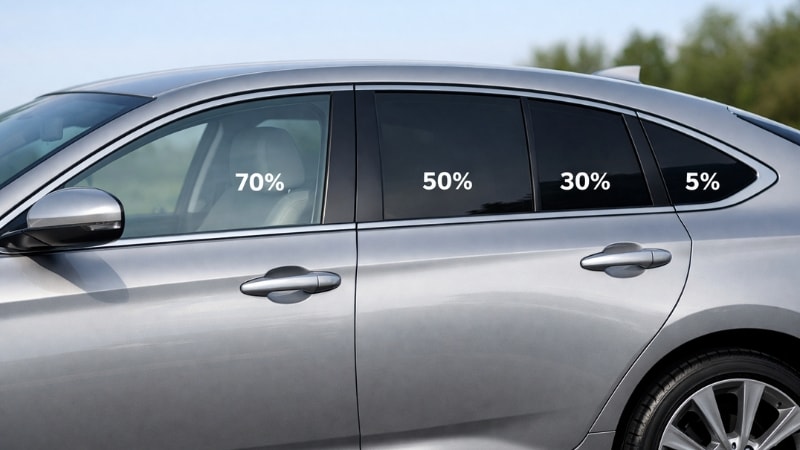
Even the darkest tint, which has 5% VLT allow visibility because it allows 5 percent visible light to pass through the window. Therefore, selecting a ceramic film with an appropriate VLT ensures the road stays visible and detailed.
Myth 6: Ceramic Tint Is Only for Hot Climates
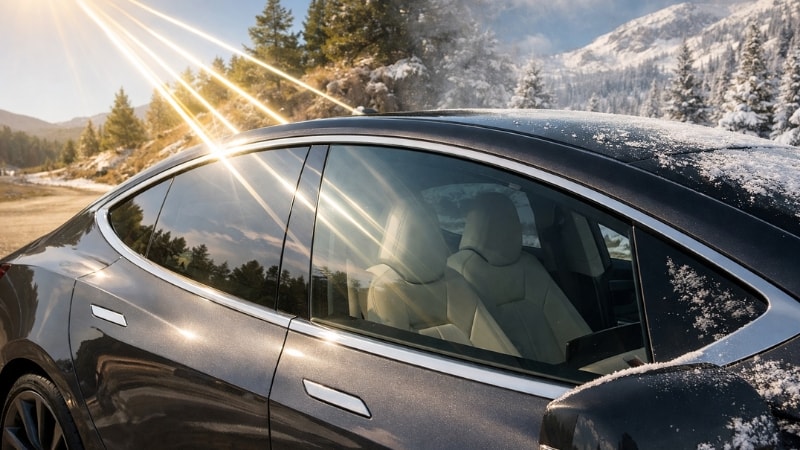
Given the functionality of heat rejection, it is mistakenly assumed that ceramic tints are reserved only for hot climates, and vehicles in colder regions don’t need to block heat. It is important to understand that protection from solar radiation has more to do with your protection than just reducing the cabin temperature.
The same UV rays that damage your skin in hot climates cause just as much harm in cold climates. Moreover, when UV rays enter the vehicle’s interior, they get absorbed by the upholestory and cause it deteriorate over time.
Myth 7: Ceramic Tint Isn’t Worth the Cost
Ceramic window tint isn’t just about the aesthetics of the vehicle and privacy, but also about the functional benefits like UV protection, heat rejection, clear visibility, glare reduction, and whatnot. All these benefits are so essential that they shouldn’t be traded for a cheaper tint with zero functionality.
So, ceramic tints may have a higher cost than dyed or metallic tints, but they serve as a long-term investment given their extensive lifespan. The higher upfront cost occurs once, while the benefits continue to last for years to come.
Ceramic Tint Pros and Cons
To truly evaluate the value of ceramic window tint, you must know its pros and cons. So, this section will expand on the benefits and demerits of ceramic tints.
Pros of Ceramic Tint
As you might have already judged, ceramic tints are not as bad as they are portrayed to be due to the myths. Here are the pros of ceramic tints;
- Excellent Visibility: Ceramic tint enhances visibility both during the day and at night. During the daytime, it blocks the blazing sun rays while at night, it blocks the unnecessary light from surrounding.
- High Heat & UV Rejection: Ceramic tint has the highest heat and UV rejection among all the tint types.
- No Signal Disturbance: Ceramic tints don’t disturb the signals; hence, your GPS will keep working.
Cons of Ceramic Tint
Here are the cons of ceramic tints;
- Higher Initial Cost: Ceramic tints may demand a higher upfront cost, but they last for years and, therefore, prove to be a long-term investment.
- Professional Installation: It requires a professional installer for a smooth application. It is not much of a demerit because professional installation is essential for long-term results.
Conclusion
The myths regarding ceramic window tint are largely outdated and have mainly stemmed from wrong assumptions. On the contrary to all the myths, ceramic window tints are rather a performance upgrade that makes your drive safer and more comfortable.
So, if you want to get your windows tinted, make a choice based on research and functionality, not myths. Otherwise, you will be missing out on useful benefits.
Multiply Your Sales with Carlike’s Professional Ceramic Tint
Start small with our low MOQ and scale up seamlessly. Carlike offers high-quality products, lightning-fast production, and customized branding solutions. With 24/7 support, we ensure your business gets the best every step of the way.
Contact us now to get a quote!
FAQs
Q1: Does a ceramic tint damage the window upon removal?
No, if you have gotten a good quality ceramic tint film, it comes off the window smoothly and doesn’t damage it. Moreover, you can follow these tips to remove the residual glue from the window.
Q2: How does ceramic window tint help in fuel saving?
With ceramic window tint, the internal temperature of your vehicle doesn’t rise. It means that the air-conditioning will not have to work hard to cool down the interior. As a result, you save bucks on the fuel that otherwise would be consumed for decreasing the temperature of the internal cabin.
Q3: Does the darker tint provide higher protection from sun damage?
The ability of ceramic tints to block harmful sun rays is related to the quality of nano-ceramic particles, not to the tint’s darkness. So, whether you choose limo tint or lightest tint, both provide similar protection from sun damage.
Q4: Can I get samples before placing a bulk order?
Yes, we offer samples so you can assess the quality and performance of our window tint films. Contact us with your sample request, and we’ll arrange prompt delivery.
Q5: Do you offer custom sizes and tint levels?
Yes, Carlike provides a range of customization options, including various sizes and tint levels. Our team will work with you to ensure the window tint films meet your specific requirements.